
Android vs. iPhone: Which Smartphone Is Actually Right for You?

 7 min. read
 Published on
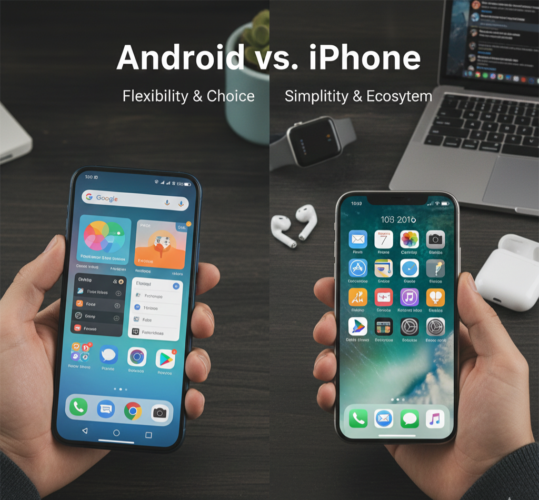
Every year, the Android vs. iPhone debate resurfaces as if one decisive winner is about to emerge. New chips are announced, cameras get sharper, screens get brighter, and yet the question remains stubbornly unresolved. That’s because the answer isn’t about specs or brand loyalty—it’s about how a phone fits into your life once the novelty wears off.
I’ve spent years moving between both platforms, sometimes carrying an Android and an iPhone at the same time. What becomes clear after the honeymoon phase is that these devices behave differently in ways that don’t show up on spec sheets. They shape how you communicate, how you work, how much control you have, and how often the phone gets in your way.
This isn’t about which phone is “better.” It’s about which one makes more sense for you.
The First Week Tells You Everything
The first few days with a new phone are deceptively pleasant. Everything is fast. The battery lasts forever. The camera feels incredible. But once that glow fades, you start noticing the personality of the operating system.
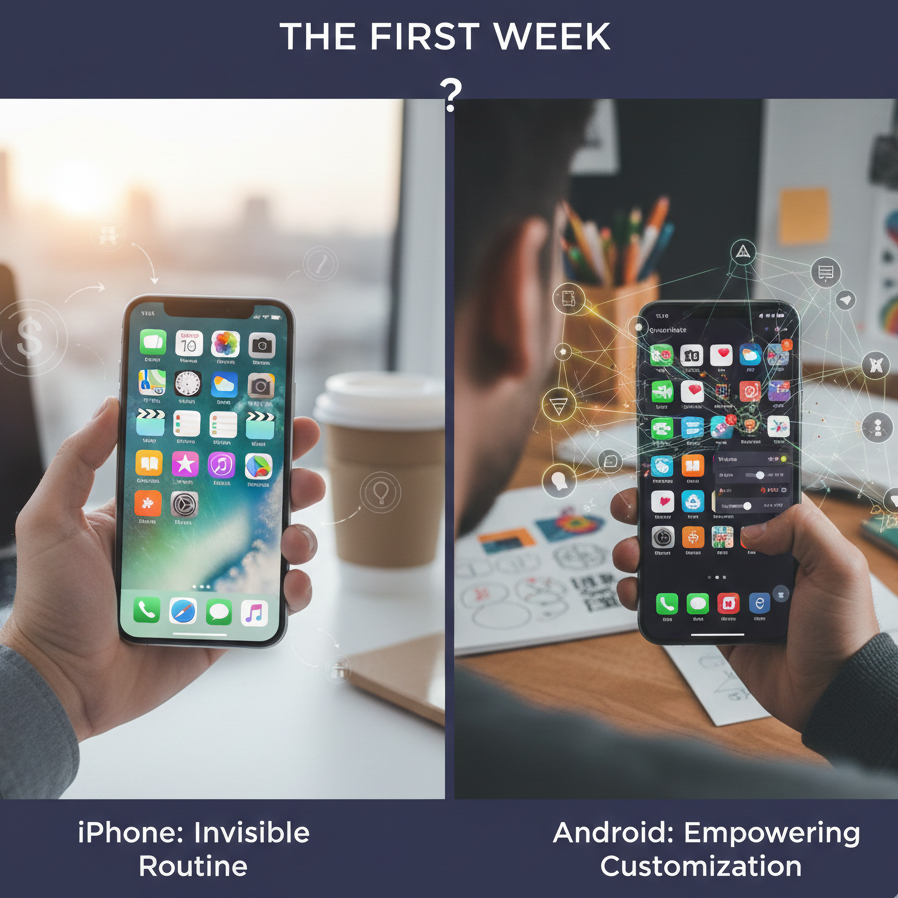
An iPhone settles into your routine almost invisibly. The interface rarely surprises you. Gestures behave the same across apps, settings are predictable, and the phone gently nudges you toward Apple’s way of doing things. It’s not that you’re overwhelmed—it’s that you’re subtly guided. After a week, the phone feels less like a device you’re managing and more like an appliance that just works.
Android feels different. From day one, it invites participation. You’re encouraged to choose default apps, rearrange the home screen, customize notifications, and decide how much control you want. This can feel empowering or exhausting, depending on your personality. The phone adapts to you, but only after you tell it how.
Neither approach is inherently better. The difference is whether you want your phone to make decisions for you, or give you the tools to make them yourself.
The Illusion of Choice vs. the Price of Certainty
At first glance, Android looks like the obvious winner on price. You can walk into a store and find Android phones at nearly every price point imaginable. Budget models cost less than a night out, mid-range phones promise “flagship-level” performance, and high-end devices compete directly with iPhones.
The iPhone experience is different. Apple offers fewer models, and none of them feel cheap. Even the “entry-level” iPhone is priced like a premium device. This can feel frustrating, especially when Android offers perfectly usable phones for far less.
But this is where surface-level pricing becomes misleading.
When you buy an iPhone, you’re paying for predictability. Apple prices its devices with the assumption that you’ll keep them longer. Software updates arrive reliably for years. Performance degradation is slow. The phone you buy today will feel relevant far longer than most Android phones at the same price.
Android’s lower entry point comes with an unspoken trade-off. Budget and mid-range Android phones often feel great initially, but they age faster. Updates slow down. Performance dips sooner. The savings are real—but so is the shorter lifespan.
The Hidden Cost of the Ecosystem
Pricing doesn’t stop at the phone itself.
Apple’s ecosystem is notoriously expensive. Accessories, repairs, and storage upgrades come at a premium. Once you’re invested—Apple Watch, AirPods, iCloud storage—it becomes costly to leave. Apple doesn’t trap you aggressively, but it makes staying feel easier than switching.
Android’s ecosystem is more forgiving. You can mix brands, choose cheaper accessories, and rely on free cloud services more easily. The trade-off is fragmentation. Things don’t always work together as seamlessly, and you sometimes pay with convenience instead of money.
Over time, iPhone ownership feels like a subscription you didn’t realize you signed up for—higher costs, but fewer headaches. Android feels more à la carte—cheaper options, but more decisions.
Control vs. Consistency in Daily Use
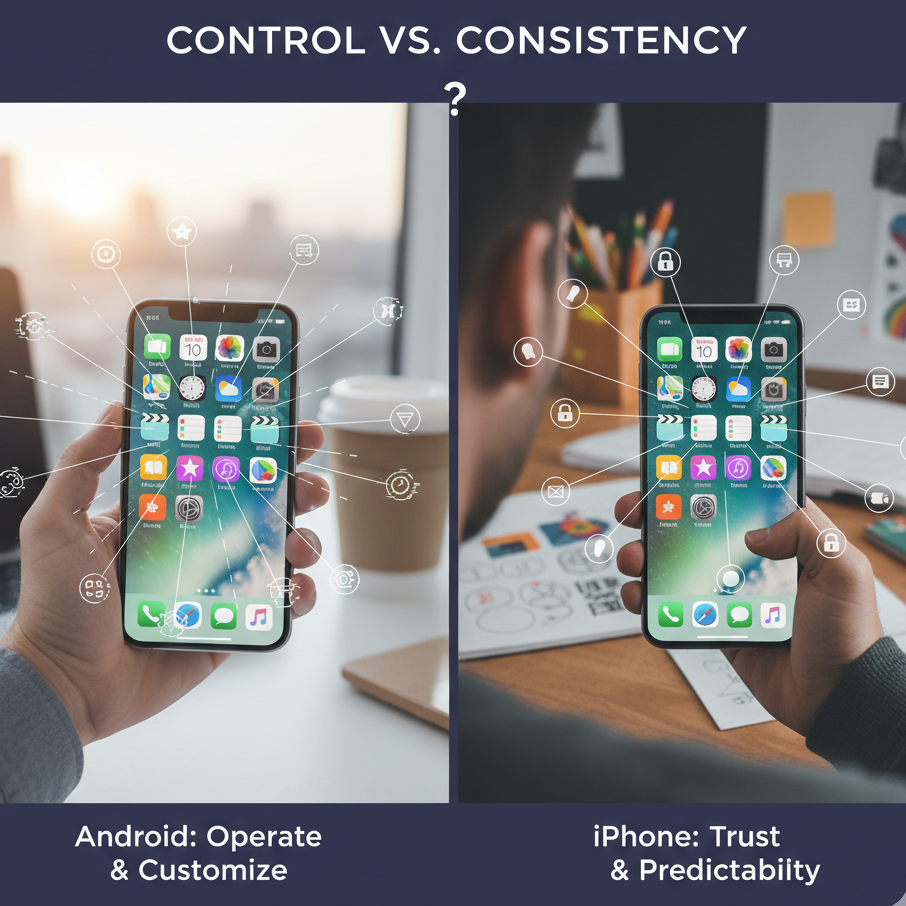
After months of use, the core difference between Android and iPhone becomes impossible to ignore: Android prioritizes control, while iPhone prioritizes consistency.
On Android, you can change how the phone behaves at a fundamental level. You can replace the launcher, alter gesture behavior, automate tasks, or install apps that reshape how the system works. Over time, your Android phone becomes uniquely yours. The downside is that things occasionally feel less polished. An app might behave differently than expected. A setting might be buried. You sometimes trade smoothness for freedom.
The iPhone, by contrast, is remarkably stable in how it behaves. Apps follow strict design guidelines. System animations are consistent. Settings are locked down not because Apple can’t offer more options, but because it chooses not to. That restraint creates a feeling of reliability. You rarely wonder whether something will break or behave oddly after an update.
Living with both, I’ve noticed that Android feels like a device you operate, while iPhone feels like a device you trust. Which one you prefer depends on whether you enjoy tweaking or simply want predictability.
The Ecosystem Becomes the Dealbreaker
Most people don’t choose a phone in isolation—they choose an ecosystem.
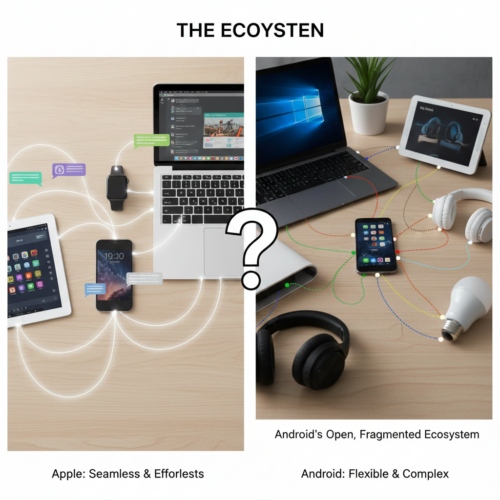
Using an iPhone alongside a MacBook, Apple Watch, or iPad feels less like juggling devices and more like using one extended system. Messages sync instantly. Files move without friction. Calls and notifications appear wherever you are. None of this feels revolutionary, but once you get used to it, it’s hard to give up.
Android’s ecosystem is more open, but also more fragmented. It works beautifully with Google services and plays well with Windows PCs, smart home devices, and third-party hardware. The trade-off is that the experience depends heavily on the manufacturer and the services you choose. You get flexibility, but less uniformity.
Over time, this becomes less about features and more about mental load. Apple reduces decision-making by locking things down. Android reduces restrictions by letting you choose, even if that means extra setup.
Cameras: Not About Quality, About Personality
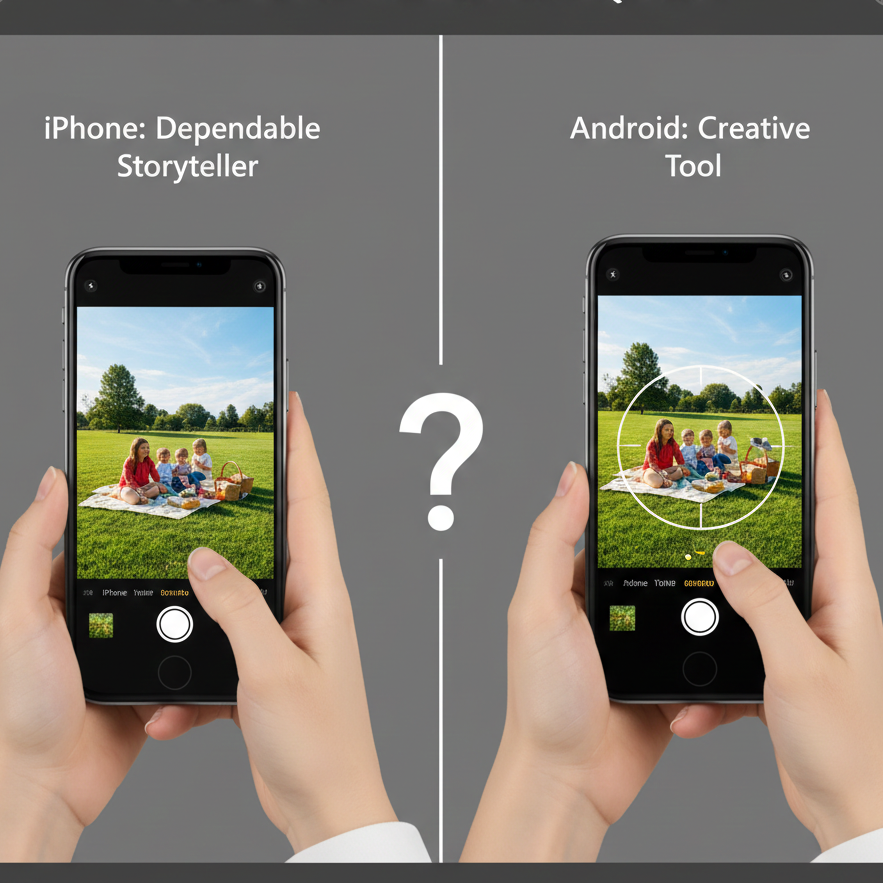
Both platforms now produce excellent photos. The difference lies in how they interpret reality.
iPhones aim for consistency. Photos tend to look natural, balanced, and ready to share. Video recording, in particular, is where iPhones quietly dominate. Stabilization, color consistency, and reliability make them feel like the safer choice when moments matter.
Android cameras often feel more ambitious. High-resolution sensors, aggressive processing, and experimental features like advanced zoom or AI enhancements can produce stunning results. But they sometimes overshoot, making images look overly sharp or processed.
Living with both, I’ve found that the iPhone camera feels like a dependable storyteller, while Android cameras feel like creative tools. One documents life faithfully. The other invites experimentation.
Longevity and the Slow Burn of Ownership
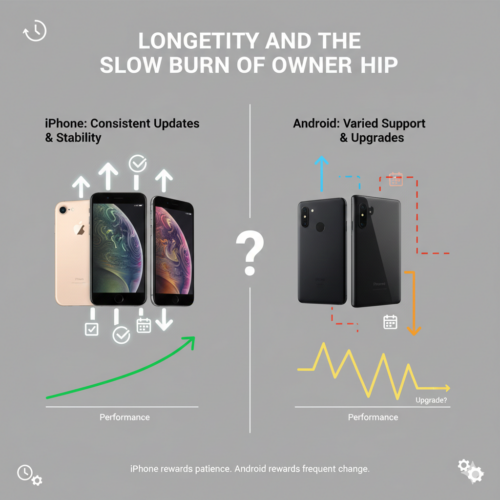
One of the least discussed differences is how these phones age.
iPhones tend to feel stable for years. Apple’s long-term software support means older devices remain usable well beyond their release window. Performance degradation is gradual, and updates arrive consistently.
Android phones age more unevenly. Flagship models hold up well, but software support varies by manufacturer. Some devices stop receiving major updates sooner, which can subtly push you toward upgrading earlier than you expected.
This matters if you keep your phone for several years. The iPhone rewards patience. Android rewards frequent change.
The Real Question Isn’t Android vs. iPhone
After living with both, the debate stops being about features and starts being about temperament.
If you value simplicity, reliability, and seamless integration—and you don’t mind surrendering some control—the iPhone fits naturally into your life. It doesn’t demand attention. It fades into the background.
If you value flexibility, personalization, and choice—and you enjoy shaping your tools—Android feels more like an extension of your preferences. It asks more of you, but gives more back in return.
Neither is objectively superior. They’re built for different types of people.
The real mistake isn’t choosing Android or iPhone—it’s choosing a phone that doesn’t match how you think, work, and live.


Improve this guide
User forum
0 messages