
How Android XR Changes Mobile Computing: From Screens to Spatial Experiences

 5 min. read
 Updated on
Mobile computing has long been defined by touchscreens, icons, and flat interfaces. Even as smartphones became more powerful, the way we interacted with them remained largely unchanged. Android XR is disrupting that model, shifting mobile computing away from purely screen-based interactions toward spatial, immersive experiences that blend digital content with the real world.
Rather than being a standalone feature or experimental layer, Android XR represents a foundational change in how Android devices process information, understand their environment, and deliver content. It signals Google’s move toward spatial computing as the next logical evolution of mobile technology.
From Touch Interfaces to Spatial Interaction
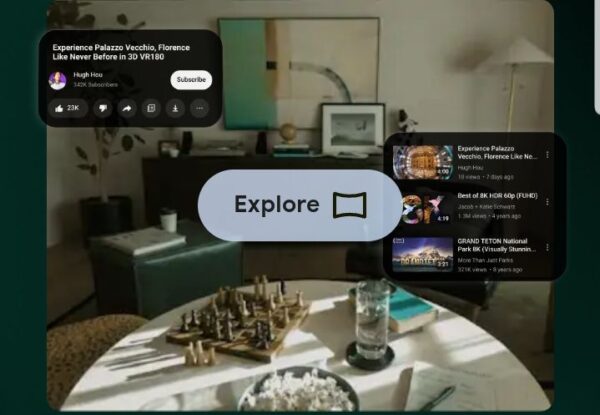
To understand how Android XR changes mobile computing, it helps to look at what mobile computing has traditionally been. Smartphones are reactive devices: users tap, swipe, and scroll through static interfaces. Android XR introduces a more proactive and contextual model.
With XR, Android devices gain spatial awareness. They can interpret depth, surfaces, lighting, and motion in real time. This allows digital elements to exist within physical space rather than being confined to a screen. The result is a computing experience that feels less like operating a device and more like interacting with information naturally.
This shift fundamentally alters user interaction. Instead of navigating menus, users engage with content through movement, perspective, and environmental context. That change alone redefines what “mobile computing” means.
Android XR as a Platform, Not a Feature
One of the most important ways Android XR changes mobile computing is through its platform-level integration. Unlike earlier AR experiments that felt bolted on, Android XR is designed to be native to the Android ecosystem.
Built on technologies such as ARCore, Android XR allows devices to continuously map their surroundings, track motion with precision, and render digital objects convincingly within real environments. Because this functionality is embedded into Android itself, developers can extend existing apps into spatial experiences rather than building entirely separate XR products.
This lowers the barrier to adoption and accelerates innovation. XR is no longer limited to niche apps; it has become a capability that can enhance productivity tools, educational software, navigation apps, and entertainment platforms alike.
Redefining Performance Expectations in Mobile Computing

Android XR also changes mobile computing by raising performance expectations. XR workloads are far more demanding than traditional mobile applications. Real-time rendering, sensor fusion, and environmental tracking require sustained processing power and efficient thermal management.
As a result, Android XR pushes hardware forward. Modern Snapdragon chipsets, advanced GPUs, and high-refresh-rate displays are no longer just about smoother scrolling—they are prerequisites for immersive computing. Battery optimization and heat control become central to the user experience, not background concerns.
This pressure drives innovation across the entire Android hardware ecosystem, influencing how future devices are designed and optimized.
Practical Use Cases That Move Beyond Gimmicks
The true measure of how Android XR changes mobile computing lies in its practical applications. In gaming, XR transforms mobile experiences into spatial environments where movement and physical space become part of gameplay. The phone is no longer just a controller—it is a window into an interactive world.
In education, Android XR enables experiential learning. Concepts that were once abstract can now be explored visually and spatially, improving comprehension and engagement. This represents a shift from content consumption to content exploration.
Retail and e-commerce benefit from XR’s ability to reduce uncertainty. Visualizing products in real-world settings changes purchasing behavior and brings physical context into digital transactions. These are not novelty features—they directly impact usability and conversion.
How Android XR Differentiates Android from Competing Platforms
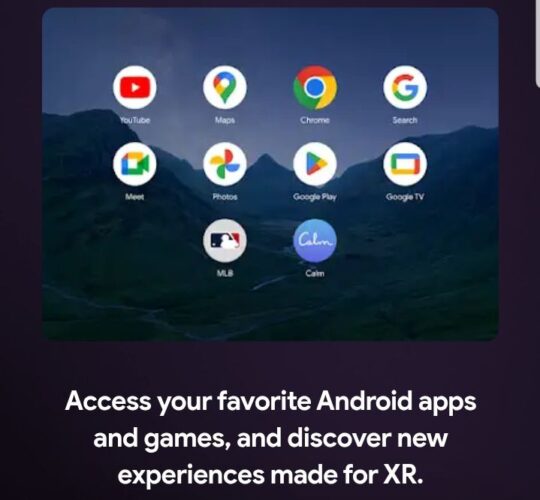
Android XR changes mobile computing in part by reinforcing Android’s core strength: scale. While competing platforms may offer more controlled or polished XR environments, Android’s openness allows immersive computing to reach a broader audience.
By supporting a wide range of devices across different price points and regions, Android XR prioritizes accessibility over exclusivity. This approach encourages experimentation and ensures XR is not limited to premium hardware or narrow demographics.
That scale is what gives Android XR long-term relevance. Spatial computing becomes something users grow into, not something reserved for early adopters.
The Challenges That Will Shape Android XR’s Future
Despite its potential, Android XR introduces new complexities. Privacy becomes more sensitive when devices continuously scan environments and interpret physical spaces. Trust and transparency will be critical to adoption.
Fragmentation also remains a concern. Delivering consistent XR experiences across varying hardware capabilities requires careful design and realistic expectations. Poor performance on lower-end devices could slow adoption if not managed properly.
How Google and OEMs address these issues will determine whether Android XR becomes foundational or remains optional.
Final Thoughts: A Fundamental Shift in Mobile Computing
Android XR does not merely enhance mobile computing—it redefines it. By moving interaction beyond the screen and into physical space, Android XR transforms smartphones from passive tools into spatially aware computing devices.
As hardware matures and software ecosystems adapt, XR will become less visible and more essential. Android XR marks the moment when mobile computing stops being flat—and starts becoming immersive, contextual, and deeply integrated into everyday life.
In that sense, Android XR isn’t just the future of Android. It’s the future of mobile computing itself.


Improve this guide

User forum
0 messages